Please note that on our website, we use cookies. They are necessary for the functioning of our website and optimizing its performance. By clicking "Allow Cookies," you agree to our cookie policy. Learn
More
Available Now
(24/7, toll-free)
Looking for personalized itineraries or have questions about our services? We're here to
help.
20 Tips to Survive Long Haul Flights (That Actually Work in 2026)
February 20, 202627 min Read Last updated on February 20, 2026
Travel Tips
Your complete guide to arriving refreshed, comfortable, and jet lag-free
Last Updated: February 2026
Introduction
You're 9 hours into a 16-hour flight. Your back aches. Your legs are swollen. You've watched every movie worth watching, and you're staring at the seat-back screen, wondering if time has actually stopped. Sound familiar?
Long-haul flights don't have to feel like a survival challenge. After years of crossing oceans in economy class, from New York to Singapore, Dubai to Sydney, London to Tokyo, I've discovered that how you feel when you land comes down to the decisions you make before and during the flight.
This isn't your typical list of "drink water and wear comfy clothes." These are 20 specific, tested strategies that will genuinely transform your long-haul experience. Let's get into it.
Quick Summary: All 20 Tips at a Glance
Hack Your Seat Selection with SeatGuru Before You Book
Use the Military Sleep Method — Adapted for 35,000 Feet
Fast Strategically to Reset Your Body Clock Mid-Air
Cabin Humidity is 10% — Here's How to Fight Back
Sync Your Meals to Your Destination Timezone Before You Board
Take Magnesium to Reduce Jet Lag by Up to 50%
Use the 4-7-8 Breathing Trick to Manage Anxiety and Sleep
Know the Best Rows for Turbulence Reduction
Build the Perfect Carry-On Kit (Beyond the Basics)
Use Compression Socks — But Wear Them Correctly
Don't Skip the Pre-Flight Workout
The 20-20-20 Eye Rule for Screen Fatigue
Layer Your Clothing Strategically
Walk the Cabin With a Purpose (Not Just to Stretch)
Use Noise-Cancelling Headphones Even When Not Listening
Set Your Watch to Destination Time the Moment You Board
Avoid These 5 Foods Before and During Your Flight
Download Entertainment in Multiple Formats Before You Go
Book the 'Mistake Fare' — Upgrade for Economy Price
Master the Post-Flight Recovery Routine
The 20 Tips in Full Detail
Tip 1: Hack Your Seat Selection with SeatGuru Before You Book
Most people pick a seat based on window vs aisle preference. That's leaving so much on the table. The free website SeatGuru.com maps every aircraft for every airline and flags seats with green (great), yellow (caution), and red (avoid) colour codes.
On a Boeing 777, for example, certain economy seats in the last row cannot recline at all — yet they're the same price as every other seat. Some seats have no under-seat storage because of equipment boxes. Bulkhead seats offer extra legroom but no overhead storage space above you during takeoff and landing.
Pro Tip: Always cross-reference your specific flight's aircraft type on SeatGuru. The same plane model can have different configurations on different routes. Enter your flight number directly for the most accurate result.
For ultra-long flights over 12 hours, the best economy strategy is to aim for exit row seats (which you can often select for free at check-in if they go unfilled) or the last row in a cabin section — yes they don't recline, but nobody will recline INTO you either.
Tip 2: Use the Military Sleep Method — Adapted for 35,000 Feet
The U.S. military reportedly developed a technique to fall asleep in under 2 minutes, and with slight modification, it works remarkably well on aircraft. The original method involves relaxing every muscle group from face to toes systematically, then clearing your mind.
The in-flight adaptation: Start by relaxing your face entirely — jaw unclenched, tongue resting, forehead smooth. Drop your shoulders as low as they'll go. Let your hands go limp in your lap. Now breathe out slowly and relax your chest, then your legs, right down to your toes. For 10 seconds, try to hold a completely blank mind. If thoughts intrude, repeat the phrase "don't think" slowly.
Combine this with an eye mask and noise-cancelling headphones playing brown noise (not white noise — brown is deeper and less fatiguing), and you have a genuinely effective sleep protocol that doesn't require medication.
Why it works: Sleep on planes is disrupted mostly by sensory stimulation — light, noise, and physical tension. This method addresses all three simultaneously.
Tip 3: Fast Strategically to Reset Your Body Clock Mid-Air
Argonne National Laboratory developed a jet lag diet protocol in the 1980s that is still referenced by frequent business travelers today. The core principle: fasting for 12-16 hours, then eating a large meal at the right time in your destination timezone, can help reset your circadian rhythm significantly faster than normal eating patterns.
The practical approach: If you're flying from New York to London (a 7-hour overnight flight), eat normally before boarding, then fast for the entire flight. When breakfast is served on board — which aligns with London morning time — eat heartily. Your body receives a powerful "morning" signal and begins adjusting your internal clock immediately.
This isn't for everyone, especially those with blood sugar issues or who get anxious without food. But for healthy travelers, strategic fasting is one of the most underused jet lag tools available.
Important: Stay well hydrated during the fast — water, herbal tea, and electrolyte drinks are fine. Avoid coffee during fasting periods as it disrupts the circadian reset effect.
Tip 4: Cabin Humidity is 10% — Here's How to Fight Back
Here's a fact that shocks most travelers: the humidity inside a commercial aircraft cabin typically sits between 10-20%, compared to the 30-60% humidity of a comfortable home environment. The Sahara Desert averages around 25% humidity. You are literally sitting in a drier environment than a desert for 10+ hours.
This explains why you land feeling exhausted, skin feeling tight, eyes burning, and often slightly sick. The moisture is being pulled from every surface of your body continuously. Your standard advice of "drink 8 glasses of water" doesn't address the surface dehydration happening to your skin, eyes, and nasal passages.
The full counter-attack: Bring a small facial mist spray (under 100ml for carry-on) and spritz your face every 2-3 hours. Use preservative-free eye drops every few hours, even if your eyes don't feel dry yet — they are. Apply a richer moisturizer than normal before boarding. A small amount of saline nasal spray keeps your nasal passages moist and dramatically reduces your chance of picking up airborne viruses.
The nasal spray tip is particularly powerful: your nasal passages are your first line of defense against airborne pathogens. Dry, cracked nasal tissue is significantly less effective at filtering viruses.
Tip 5: Sync Your Meals to Your Destination Timezone Before You Board
Jet lag is fundamentally a timing mismatch between your internal body clock and the external environment. Your digestive system runs on its own internal clock — one of the strongest circadian rhythm anchors you have. By shifting your meal times 24-48 hours before a long eastward flight, you give your body a powerful head start on the adjustment.
If you're flying from Los Angeles to Tokyo (a 14-hour time difference), you'll land at a time your body perceives as the middle of the night, even though it's morning in Tokyo. Starting to eat breakfast, lunch, and dinner 2-3 hours earlier than normal for 2 days before your flight nudges your circadian rhythm in the right direction before you even get on the plane.
On the flight itself, refuse airline meal services that don't align with your destination time, or eat very small portions, then have your first proper "destination-time meal" as close to the correct local mealtime as possible after landing.
Tip 6: Take Magnesium to Reduce Jet Lag by Up to 50%
Magnesium glycinate is one of the most evidence-supported supplements for sleep quality and muscle relaxation — and it's widely underutilized by travelers. Magnesium plays a key role in regulating the neurotransmitters that prepare the brain for sleep, and most adults are already mildly deficient.
Taking 300-400mg of magnesium glycinate (the most bioavailable form) 1-2 hours before your target sleep time on the plane can noticeably improve sleep depth and reduce the muscle restlessness that makes sleeping in upright seats so difficult.
Combine with 0.5mg of melatonin (note: lower dose is more effective than the 5-10mg often sold in pharmacies) taken at the destination bedtime equivalent and you have a non-pharmaceutical, low side-effect sleep protocol that many frequent flyers swear by over prescription sleep aids.
Always consult your doctor before starting any supplement regimen, especially if you take other medications. This information is educational, not medical advice.
Tip 7: Use the 4-7-8 Breathing Trick to Manage Anxiety and Sleep
Flight anxiety affects a much larger proportion of passengers than airlines publicly acknowledge, and even those without clinical anxiety often experience elevated cortisol during long flights due to confinement, noise, and loss of control. Elevated cortisol is also one of the primary reasons you cannot fall asleep even when exhausted.
The 4-7-8 breathing technique activates the parasympathetic nervous system — your body's rest-and-digest mode — and can bring down heart rate and cortisol within minutes. Here's how:
Exhale completely through your mouth
Close your mouth and inhale quietly through your nose for 4 counts
Hold your breath for 7 counts
Exhale completely through your mouth for 8 counts
Repeat 3-4 cycles
The extended exhale is the key mechanism. When your exhale is longer than your inhale, your vagus nerve signals safety to your nervous system. This works even during turbulence — arguably when you need it most.
Tip 8: Know the Best Rows for Turbulence Reduction
Turbulence is one of the most anxiety-inducing aspects of flying, but your seat position dramatically affects how much you feel it. An aircraft behaves like a seesaw — the pivot point is roughly at the wing. The further you sit from the wings (front or back), the more exaggerated the pitching motion feels.
The smoothest seats on any commercial aircraft are those directly over the wing or within 5 rows of it. Statistically, rows 10-30 on most narrow-body aircraft and rows 20-40 on wide-body planes are the sweet spot. Front rows experience significantly more pitch movement. The back rows experience the most vertical movement.
On your next booking, use the aircraft seat map to find which rows align with the wing — usually visible by the emergency exit rows — and try to book within that range. On a particularly turbulent route (think: North Atlantic, trans-Himalayan corridors, or flights near jet streams), this simple adjustment makes a real difference.
Tip 9: Build the Perfect Carry-On Kit (Beyond the Basics)
Everyone tells you to bring a neck pillow and headphones. Here's what experienced long-haul travelers actually carry that nobody tells you about:
Portable power bank (20,000mAh): Many long-haul aircraft still have broken seat power outlets. A high-capacity power bank means you're never without power regardless.
Electrolyte powder sachets: Not sugary sports drinks — zero-sugar electrolyte powders that you add to water. Combat the dehydration effect of low cabin humidity far more effectively than plain water.
Resistance band: A lightweight loop band that fits in any pocket. Used for seated leg exercises, it actively prevents blood pooling in your legs during the flight.
Melatonin and magnesium (pre-measured doses): Already measured into a small pill organizer so you're not fumbling with bottles at 2am trying to work out dosage.
Merino wool socks (2 pairs): Merino regulates temperature, resists odors, and is incredibly soft. Change into a fresh pair halfway through ultra-long flights.
Empty 500ml water bottle: Fill it after security and refill throughout the flight. This alone forces you to drink significantly more water than relying on the cabin crew service alone.
Tip 10: Use Compression Socks — But Wear Them Correctly
Compression socks are widely recommended for long-haul flights to prevent deep vein thrombosis (DVT) and reduce swollen feet and ankles. But most people put them on at the airport gate — which is too late.
The correct protocol: Put compression socks on at home before you leave for the airport. Your legs begin the swelling process the moment you sit in an airplane seat, and the boarding process often involves 30-60 minutes of sitting before the plane even departs. Starting compression early significantly outperforms starting at the gate.
Choose graduated compression in the 15-20 mmHg range for economy travel. Knee-length is more effective than ankle socks for circulation purposes. Remove them if you feel any tingling or numbness during the flight.
DVT risk increases significantly after 4 hours of continuous sitting. For flights over 8 hours, compression socks combined with getting up to walk every 2 hours and doing seated leg exercises is your best protection.
Tip 11: Don't Skip the Pre-Flight Workout
The 24 hours before a long-haul flight are when most travelers are frantically packing, traveling to the airport, and stress-eating in airport lounges. Physical exercise is the last thing on their mind — which is exactly why it gives you such an edge.
A moderate 45-minute workout the morning of your flight (or the evening before an early departure) delivers several measurable benefits: it improves sleep quality by increasing adenosine buildup in the brain (a natural sleep-promoting compound), it increases circulation which reduces swelling, it reduces cortisol levels which makes sleep onset easier, and it depletes your glycogen stores slightly which increases your metabolic flexibility during the fasting period if you choose to fast on board.
Nothing extreme — a brisk 30-minute walk, a yoga session, or a moderate gym workout is ideal. Avoid very intense exercise within 12 hours of a long flight as this can elevate inflammatory markers.
Tip 12: The 20-20-20 Eye Rule for Screen Fatigue
Most passengers spend the majority of their flight staring at a screen — seat-back entertainment, laptop, phone, or tablet. Combined with the extreme dry cabin air and the disruption to blink patterns that screen use causes, this is a recipe for severe eye fatigue and headaches that persist for days after landing.
The 20-20-20 rule, developed by optometrists: Every 20 minutes of screen use, look at something 20 feet away for 20 seconds. On a plane, the furthest you can typically look is down the cabin aisle, which is roughly 20-30 feet. Set a quiet phone alarm every 20 minutes as a reminder.
Combine this with lubricating eye drops every 2-3 hours and reducing your screen brightness by 30-40% lower than you normally use (the cabin is darker than most indoor environments anyway), and you'll arrive without the glazed, burning eyes that most passengers disembark with.
Tip 13: Layer Your Clothing Strategically
Aircraft cabin temperature fluctuates significantly during a long flight — often by 6-8 degrees Celsius between cruising altitude stability and the warmer periods during meal service or when the sun hits the cabin. Airlines also set cabin temperatures at the average comfort level, which means half the plane will feel too cold and half too warm, regardless.
The optimal long-haul outfit is built on the layering principle: a breathable base layer (merino wool or moisture-wicking synthetic — never cotton, which holds moisture and becomes cold), a mid-layer you can remove easily (a zip-up hoodie or light cardigan), and warm socks to replace your shoes.
Crucially: wear slip-on shoes or shoes with minimal lacing. Your feet will swell during a long flight, and tight shoes become progressively more uncomfortable. Removing your shoes entirely during the flight (into warm socks) and replacing them towards the end is standard practice for smart long-haul travelers.
Tip 14: Walk the Cabin With a Purpose (Not Just to Stretch)
The advice to "walk around the cabin" is right but vague. Most people do one slow shuffle to the bathroom and back and call it done. Here is a structured cabin walking protocol that takes 5 minutes and delivers real circulatory benefit:
Every 90-120 minutes, do a full cabin walk to the back galley and back, but instead of simply walking, incorporate these movements: calf raises (10 reps) while standing at the galley, hip circles (5 each direction), shoulder rolls, and neck stretches while waiting for the bathroom. If the galley area is empty, a 30-second standing forward fold does wonders for the lower back.
The goal is not just to move — it's to actively pump blood back up from your lower extremities, which gravity is constantly pulling down during seated flight. Combined with the resistance band exercises from Tip 9, this protocol genuinely reduces post-flight leg fatigue.
Tip 15: Use Noise-Cancelling Headphones Even When Not Listening
The noise level inside an aircraft cabin typically sits around 80-85 decibels — comparable to a busy city street or a running lawnmower. Extended exposure at this level causes auditory fatigue and contributes to the overall exhaustion of long-haul travel, even when you're "just sitting there."
High-quality active noise-cancelling (ANC) headphones reduce this ambient noise level by 20-30 decibels. The physiological effect of this reduction — even when you're not playing any audio — is significant: lower heart rate, reduced cortisol, less mental fatigue, and dramatically better sleep quality.
If you can invest in only one piece of travel gear, make it a pair of good ANC headphones. They pay dividends on every single long-haul flight for years. Playing brown or pink noise through them (freely available on streaming apps) provides an additional layer of auditory masking that many travelers find deeply sleep-inducing.
Tip 16: Set Your Watch to Destination Time the Moment You Board
This is a psychological and physiological trick that experienced frequent flyers use without exception. The moment you board the plane — not when you land, not when you clear customs, but as you sit down — change every clock you have to the destination timezone.
When your watch reads 11 pm destination time, your brain begins making decisions aligned with that reality: you choose to sleep, you decline the 2pm destination-time coffee offer, you eat when it's a mealtime in your destination rather than when the airline serves meals. These micro-decisions compound over a 14-hour flight into a meaningful circadian head start.
The psychological power of this is underrated. When you maintain home-timezone thinking ("it's only 4 pm at home, I can't sleep yet"), you actively fight your own adjustment. Committing to destination time fully — and acting accordingly — is one of the single most powerful anti-jet-lag strategies available.
Tip 17: Avoid These 5 Foods Before and During Your Flight
What you eat in the 12-24 hours before and during a long-haul flight significantly impacts your comfort, sleep quality, and post-landing recovery. Here are the five biggest offenders:
Carbonated drinks: Gases expand at altitude due to lower cabin pressure. Carbonated beverages dramatically increase bloating and discomfort — this includes sparkling water and soda.
Alcohol: While it seems to help sleep onset, alcohol suppresses REM sleep quality, dehydrates you significantly, and increases inflammation. The net effect is worse sleep and a worse landing condition.
Salty airport food: Pre-flight sodium causes fluid retention that makes in-flight swelling significantly worse. Airport fast food is notoriously high in sodium.
Cruciferous vegetables (broccoli, cabbage, beans): Gas-producing foods become acutely uncomfortable at altitude, where intestinal gases expand.
Caffeine after the first 2 hours: Caffeine has a half-life of 5-7 hours. A coffee at hour 3 of a 14-hour flight will still be active in your system at hour 10 when you need to sleep.
Tip 18: Download Entertainment in Multiple Formats Before You Go
Every experienced long-haul traveler has been burned by a broken seat-back screen, unreliable in-flight WiFi, or a movie selection so outdated it's genuinely depressing. The solution is to over-prepare your personal entertainment library before you leave home.
The ideal pre-flight download strategy:
2-3 movies on Netflix/Disney+ offline
5-6 podcast episodes across 2-3 different shows
2-3 audiobook titles (a long flight is one of the best environments for audiobooks)
A long-form reading list saved to a read-later app like Pocket
All necessary work files downloaded locally — never rely on cloud access mid-flight
The variety matters: your mood at hour 2 is very different from your mood at hour 11. Having options across entertainment types means you can always match your consumption to your state of mind.
Tip 19: Book the 'Mistake Fare' — Upgrade for Economy Price
Airlines occasionally publish fares with pricing errors — business or premium economy tickets at economy or even budget prices. These "mistake fares" or "error fares" are more common than airlines would like, and websites like Secret Flying, Airfarewatchdog, and the Flyertalk forum community track and publish them in real time.
Beyond mistake fares, the upgrade-at-check-in strategy is highly underutilized. Airlines frequently offer discounted premium cabin upgrades at online check-in (24-72 hours before departure) when business class has empty seats to fill. These upgrade offers can be 50-70% below the original premium cabin fare.
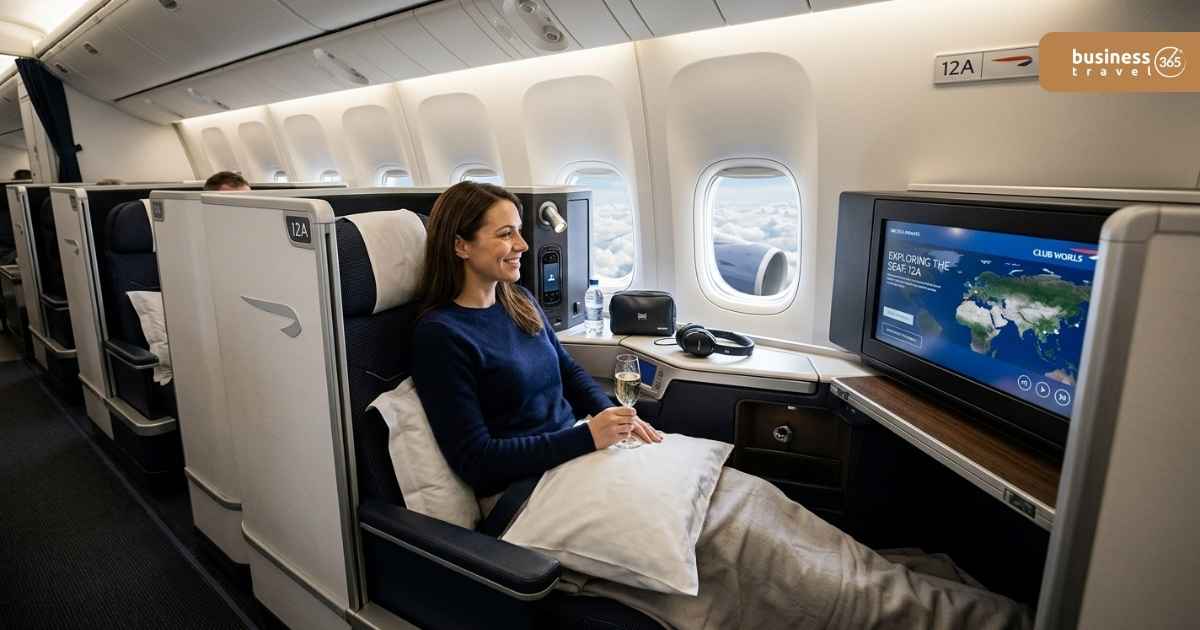
For ultra-long haul flights over 14 hours, a business class flat bed isn't a luxury — it's a functional upgrade to your productivity, health, and arrival condition. When the price difference narrows significantly through these strategies, the calculus changes completely.
Tip 20: Master the Post-Flight Recovery Routine
Most jet lag guides focus entirely on the flight itself and ignore the 24 hours after landing — arguably the most important period for your recovery timeline. What you do in the first few hours after landing largely determines whether you're functional within 1 day or struggling for an entire week.
The post-flight recovery protocol:
Immediately on landing: expose yourself to natural daylight. Sunlight is the single most powerful circadian zeitgeber (time-giver) your body has. Even 20 minutes outdoors significantly accelerates the resetting process. Do not wear sunglasses during this initial light exposure.
Stay awake until local bedtime regardless of how tired you feel, unless it's within 2 hours of a reasonable local bedtime. Going to bed at 6 pm local time locks in a bad rhythm.
First evening meal: eat high-protein and high-fat foods with minimal carbohydrates. This reduces post-flight inflammation and supports neurotransmitter recovery.
First night: take 0.5mg melatonin 1 hour before your target local bedtime. Do light movement — a 20-30 minute walk — rather than intense exercise. Avoid alcohol for the first 48 hours post-landing as it dramatically slows circadian recovery.
The single most common jet lag mistake: napping for more than 20 minutes on arrival day. A brief 20-minute power nap is fine; anything longer pushes your recovery by a full day.
Frequently Asked Questions
How long does jet lag last after a long-haul flight? Jet lag typically lasts 1 day per timezone crossed, though this varies significantly based on travel direction (eastward is harder than westward), age, fitness level, and how well you prepared. Using the strategies in this guide — particularly the pre-flight meal timing, strategic fasting, light exposure protocol, and magnesium supplementation — many travelers reduce their recovery to 30-50% of the typical duration.
Is it better to sleep or stay awake on a long-haul flight? It depends on the direction of travel and your arrival time. For overnight eastward flights (e.g., USA to Europe), sleeping as much as possible is strongly advised. For daytime flights or westward travel, staying awake and adjusting to destination time on board is often more beneficial. The key is to align your sleep timing with destination night — not with what your body currently thinks.
What is the best seat for sleeping on a long-haul flight? For economy, a window seat provides a surface to lean against and means you won't be disturbed by other passengers. Avoid bulkhead economy seats for sleep — the drop-down tray tables sit on the armrests, which can't be raised, locking you in a narrower seat.
How do you prevent swollen feet on long-haul flights? Start wearing compression socks before you arrive at the airport. Stay hydrated with electrolyte-supplemented water. Walk the cabin every 90-120 minutes. Do seated calf raises every 30 minutes (10-15 reps). Avoid alcohol and high-sodium food before and during the flight.
What should I eat before a long-haul flight? Eat a balanced meal rich in lean protein and complex carbohydrates 2-3 hours before departure. Avoid heavy meals immediately before flying. Skip cruciferous vegetables at your pre-flight meal. Stay well hydrated and start electrolyte supplementation before you even reach the airport.
Final Thoughts
Long-haul flying is one of the genuinely remarkable things about modern life — the ability to be on the other side of the planet in under a day. But that miracle comes with a physiological cost that most travelers are still paying unnecessarily.
The 20 tips in this guide aren't theoretical. They're drawn from hard-won experience in economy class on routes that test every theory about human endurance in a metal tube at 35,000 feet. Not all of them will be relevant to every journey, but picking even five or six to apply consistently will produce a noticeable difference in how you arrive.
The most important mindset shift: stop thinking about the flight as something to "get through" and start thinking about it as 24 hours you can actively manage. Hydration, sleep, movement, timing, and preparation are all within your control. Your destination self will thank you.
Safe travels. Arrive like a pro.
Last Updated: February 2026 |
5223
URL Copied
Previous Blog
Summer Business Class Deals Strategy: How to save 30-70% on peak-season flights in 2026
By providing my contact details and clicking on "REQUEST
QUOTE" I agree to be contacted for travel information via phone, text messages and
email. No purchase necessary. We respect your privacy
Thank You
for your request
We appreciate your interest. Your request is now being passed on to your dedicated travel consultant.
We will contact you shortly.