Please note that on our website, we use cookies. They are necessary for the functioning of our website and optimizing its performance. By clicking "Allow Cookies," you agree to our cookie policy. Learn
More
Available Now
(24/7, toll-free)
Looking for personalized itineraries or have questions about our services? We're here to
help.
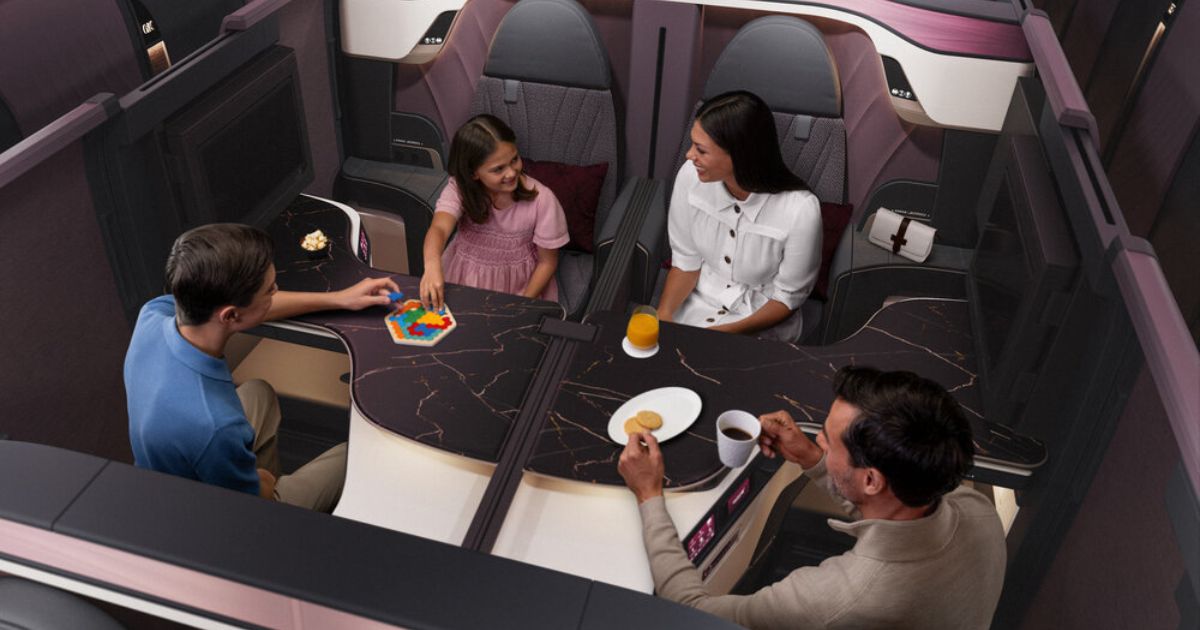
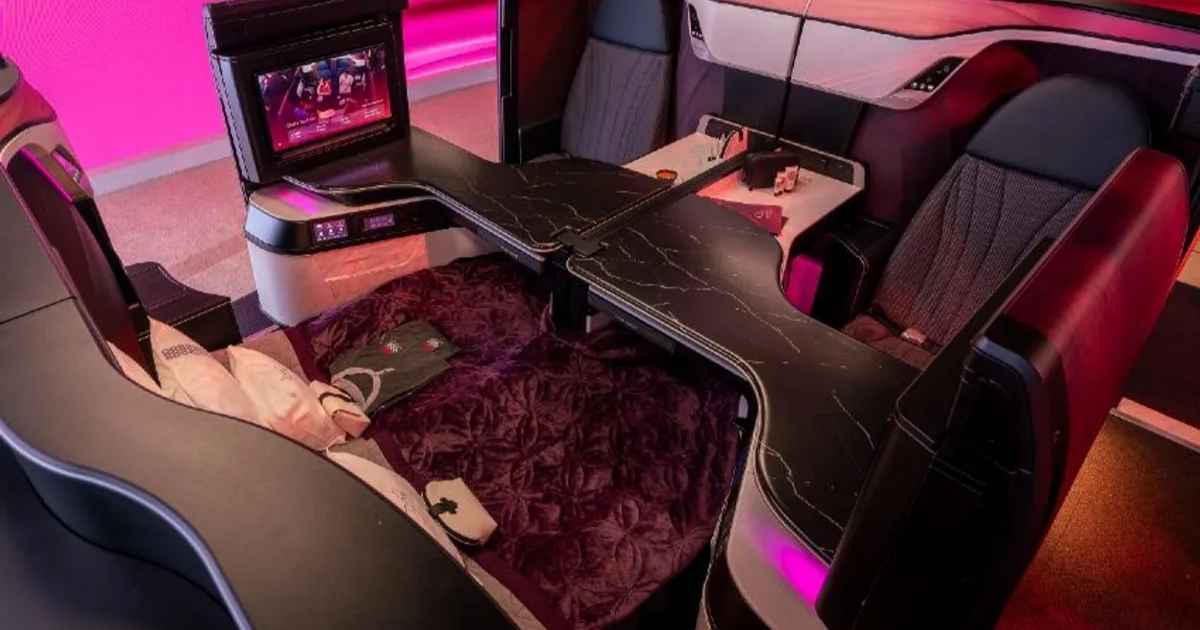
Every Qatar Airways QSuite seat has a sliding door, a lie-flat bed, and direct aisle access. But seat choice is still important, depending on who you are traveling with. Solo travelers get the most privacy from A and K window seats in odd-numbered rows. These seats sit against the fuselage in a fully enclosed rear-facing position. Couples who want a double bed need E and F seats in the odd-numbered rows. These seats are not available for booking online and must be requested directly through Qatar Airways or a travel agency. Groups of four can access the quad configuration using those same center seats plus the row behind, again requiring direct booking. Forward-facing travel is available in even-numbered rows throughout the cabin. The only downside is that the double-bed configuration is only possible in rear-facing odd-numbered rows.
Business Class Airlines, Luxury Experience, Premium Airlines
The Qatar Airways QSuite is the most awarded business class product in commercial aviation, and this review covers every element of the experience from ground to landing. The enclosed private suite with a sliding door, a 79-inch lie-flat bed, dine-on-demand dining, and unique double and quad configurations for couples and groups make it a genuinely class-leading product on long-haul routes. Service consistency is high; amenity kits and sleepwear are premium, and the Al Mourjan lounge in Doha adds a world-class pre-flight experience. The main watch-out is aircraft swap risk; QSuite is only guaranteed on the A350-1000 fleet, and monitoring your aircraft assignment before departure is essential. Published fares from US cities are significant, but private consolidator fares available through specialist agencies offer the same cabin at meaningfully lower prices.
Business Class, Luxury Experience, Premium Airlines
Emirates operates business class flights from twelve US departure cities in 2026, all connecting through its Dubai hub to over 140 destinations worldwide. Four cities, New York JFK, Los Angeles, Washington DC, and San Francisco, are served by the A380. The remaining eight gateways fly the Boeing 777, with the new fully lie-flat 1-2-1 refurbished cabin now deployed on routes including Chicago, Dallas, Boston, Seattle, Miami, and Newark. Flight durations range from twelve hours from the East Coast to over sixteen and a half hours from Florida and Texas, making aircraft type and cabin configuration particularly important to check on the longer sectors. Premium economy launched on New York JFK routes in 2026, and the 777 retrofit programme continues to expand across the US network through the year.
Business Class Airlines, Premium Destinations, Travel Tips
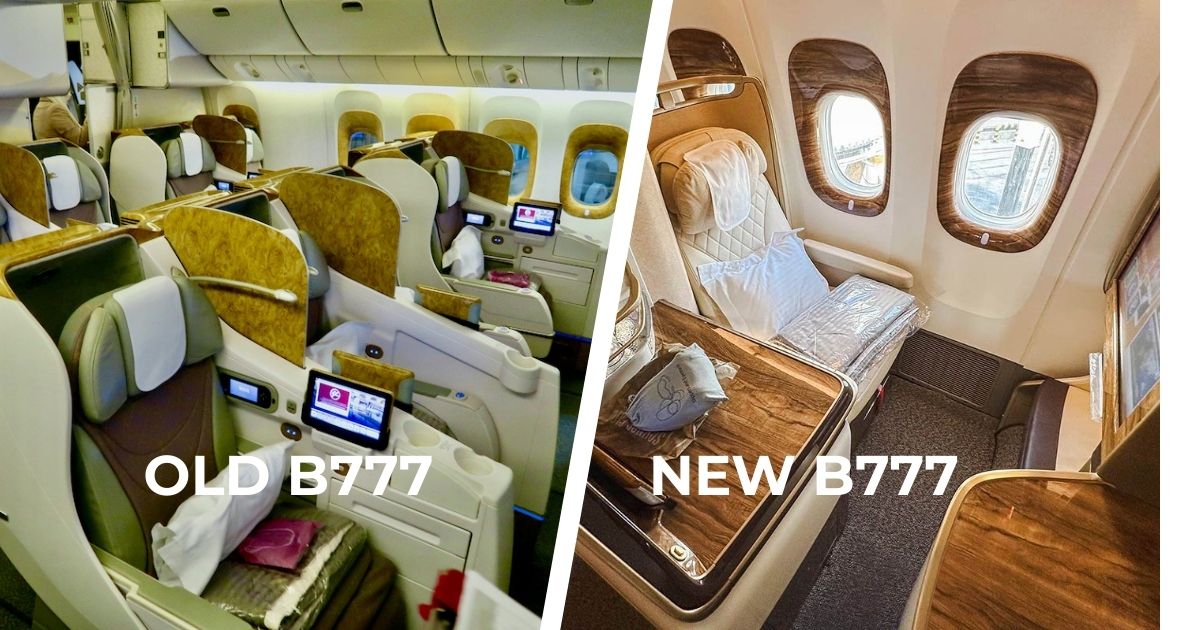
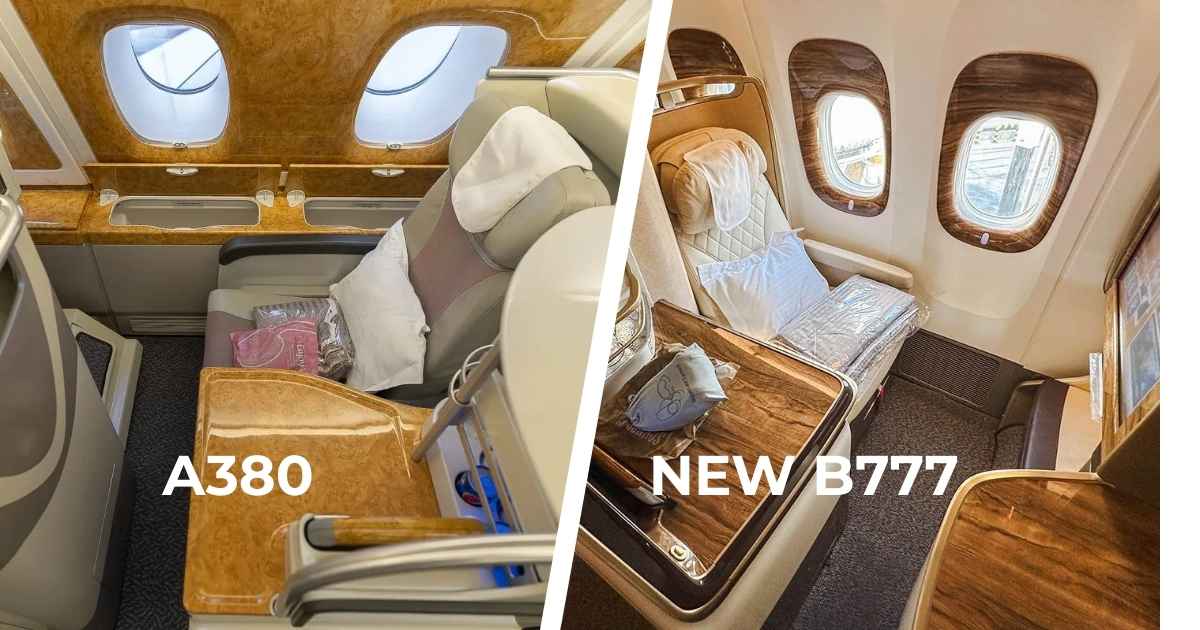
Emirates 777 business class has undergone its most significant transformation in over a decade. The outdated 2-3-2 angled-flat layout, long criticised for middle seats and beds that did not fully flatten, has been replaced by a new 1-2-1 staggered cabin with fully lie-flat 78-inch beds, 23-inch entertainment screens, direct aisle access from every seat, and a personal minibar. The retrofit launched in late 2024 and is rolling out at a rate of roughly one aircraft every two to three weeks, with US routes including Chicago, Boston, Dallas, Seattle, Miami, and Newark already receiving the new product. Over 75 percent of the 777 fleet still carried the old cabin as of late 2025, making it essential to confirm which configuration is assigned to your specific flight before you book.
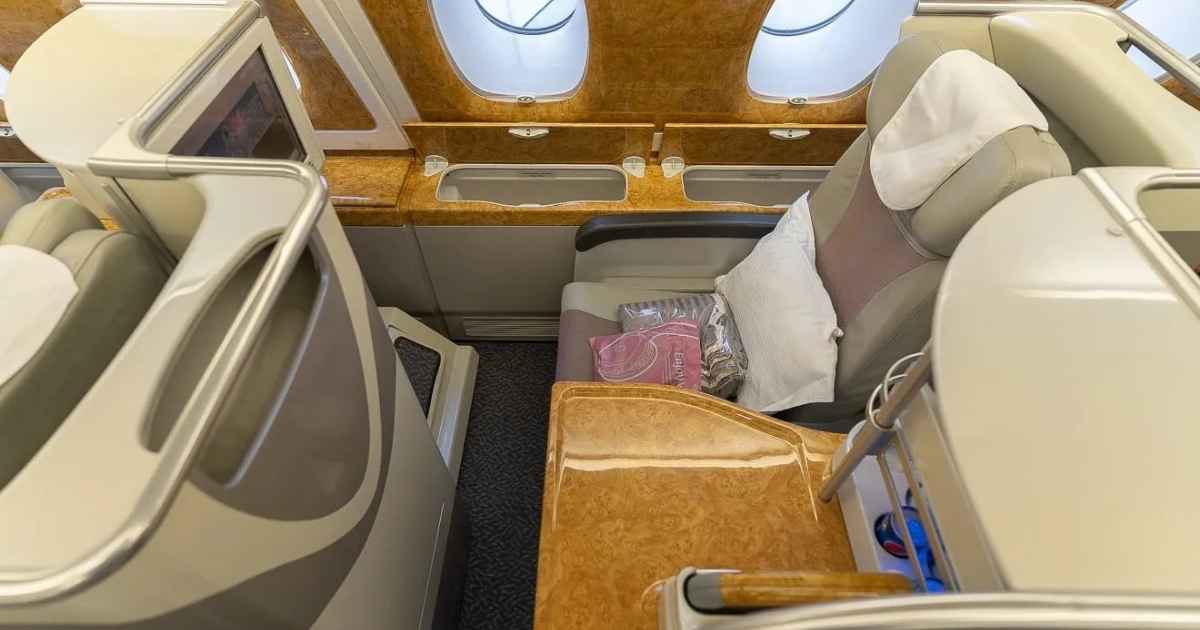
Emirates A380 business class has 76 seats in a staggered 1-2-1 layout, but seat quality varies significantly depending on your position in the cabin. A and K seats deliver the longest beds, maximum privacy, and the best window views, ideal for solo travellers. E and F honeymoon seats are the go-to choice for couples wanting to sit together. Aisle-adjacent B, D, G, and J positions carry shorter beds of around 70 inches, making them a step down for taller passengers and those prioritising sleep. Rows 25 and 26 near the onboard bar work well for day flights but are best avoided on overnight long-haul sectors. Knowing your seat before you book is one of the simplest ways to get more from an Emirates A380 business class flight.
Emirates operates two very different business class products across its A380 and 777 fleet, and knowing the difference before you book can completely change your experience. The A380 offers fully lie-flat beds, a 1-2-1 layout with direct aisle access, and the famous onboard bar on the upper deck. The 777 comes in two versions: an older angled-flat 2-3-2 cabin and a newer refurbished product that matches the A380 on most hardware. This guide breaks down every key difference, seats, beds, cabin size, and who each aircraft suits best, so you can book with confidence rather than guesswork.
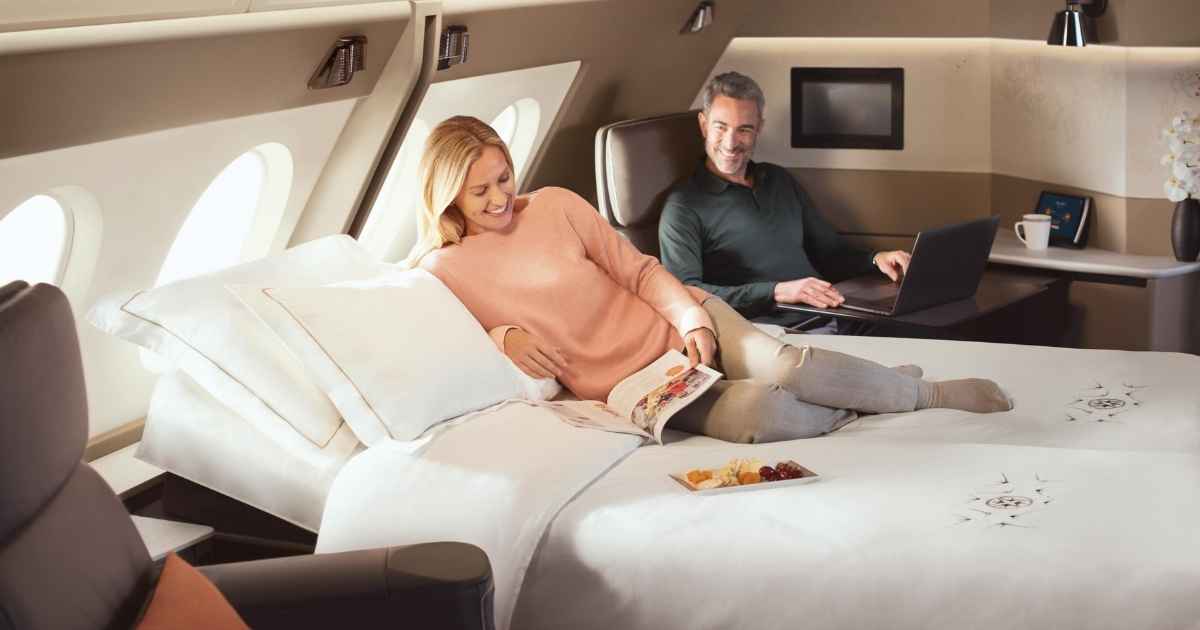
For couples traveling together, there is no greater prize in the sky than the Singapore Airlines A380 Double Bed. While the First Class Suites get all the Instagram fame, savvy travelers know that you can get a similar "honeymoon" experience in Business Class for half the price, if you know exactly which seats to pick.
Business Class Airlines, Luxury Experience, Luxury Travel
Long-haul flights don't have to leave you exhausted, swollen, and jet-lagged for days. In this guide, we share 20 deeply researched and traveler-tested tips that go far beyond the usual advice of "drink water and wear comfy clothes." From hacking your seat selection with SeatGuru and using the Military Sleep Method, to strategic fasting for jet lag and knowing exactly which rows have the smoothest ride, every tip is designed to give you a real edge in the air. You'll also learn the correct way to use compression socks, how cabin humidity at 10% is silently wrecking your body, and the post-flight recovery routine that gets you back to 100% in record time. Whether you're flying 8 hours or 18 hours, this is the only long-haul flight survival guide you'll need in 2026.
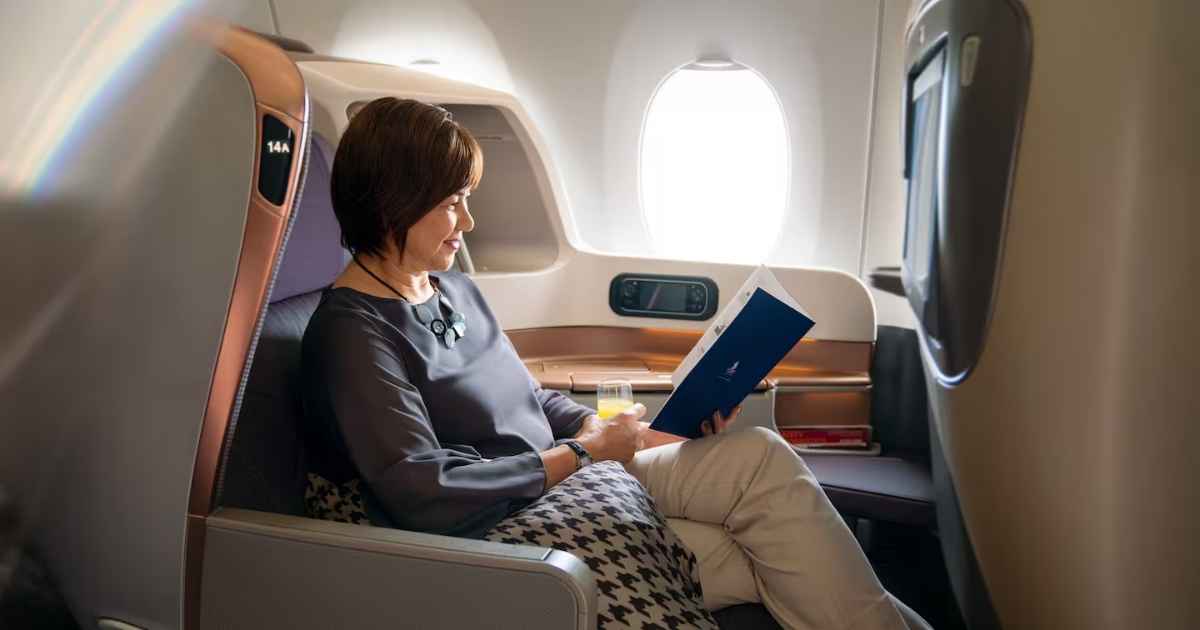
ingapore Airlines operates the A350-900 in three configurations — long-haul, ultra long-haul, and medium-haul — and the business class experience across all three is built around a 1-2-1 flat-bed cabin with Scottish leather seats, chef-curated dining via Book the Cook, and Le Labo amenity kits on flights over six hours. This review covers every dimension of the product: seat specs, privacy, sleep quality, storage, the best routes to book it on, and who gets the most out of flying it.
Business Class Airlines, Flat Bed Seats, Premium Airlines
American Airlines is the last U.S. carrier with a true international First Class, but big changes are coming in 2026 with the new "Flagship Suites." This guide breaks down the critical differences between Flagship First and Business Class, from the exclusive Chelsea Lounge access at JFK to the unique swivel seats on the 777-300ER. We analyze whether the extra space and dining upgrades justify the premium price tag before the cabin is retired forever. Plus, discover how BusinessTravel365 can help you book these lie-flat seats for 30-70% less than published fares.
Business Class, Business Class Airlines, First Class
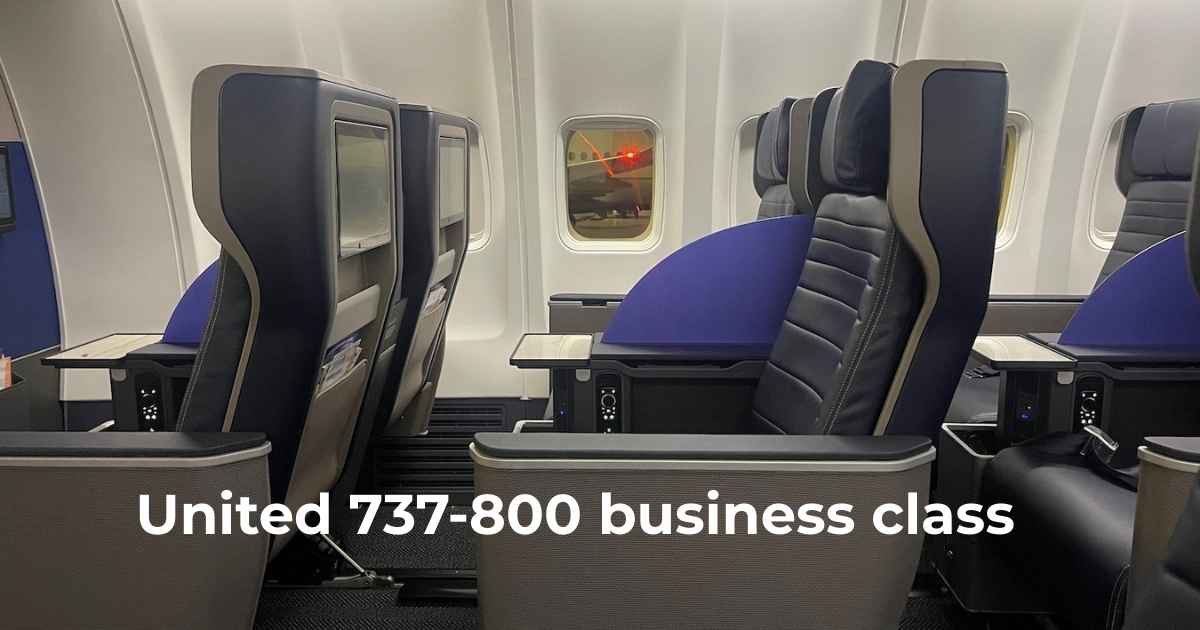
Searching for "Boeing 737-800 business class United" usually means you're asking the wrong question. United calls it "First Class" on these domestic aircraft, and you're getting recliner seats in 2-2 configuration—not the lie-flat Polaris product. This complete guide reveals what you actually receive on United's 737-800 flights, which routes operate this aging aircraft, honest seat comfort compared to real international business class, and the consolidator pricing reality that makes First Class 35-50% cheaper than published fares. Know exactly what you're booking before you pay premium prices.
Summer business class fares typically surge during peak travel season, often reaching $6,000–$12,000 roundtrip. This guide explains how travelers can still save 30–70% on summer 2026 business class flights by using consolidator access, booking at the right time, and understanding airline pricing behavior.
Based on real booking data and route analysis, the article breaks down the best booking windows, high-value routes to Europe, Asia, and the Middle East, and why January–March 2026 offers the strongest opportunity for discounted premium seats. It also explains how consolidator fares work, why online booking sites can’t access them, and how small changes in dates, departure cities, or routing can unlock thousands in savings.
The result is a practical, data-driven strategy for securing true business class comfort at economy-plus prices, without compromising aircraft quality, service, or mileage earning.
Business class to Europe costs $6,500-9,500 published while premium economy runs $2,500-4,500—a $4,000-5,000 gap making the choice obvious for budget travelers. But consolidator pricing fundamentally changes the equation: business class $3,400-4,800 vs premium economy $1,800-2,900, narrowing the decision to just $1,600-2,000 for lie-flat beds, lounge access, and arriving fresh instead of exhausted. This comprehensive guide compares real product differences (seat specs, sleep quality, dining, work capability), provides break-even analysis showing when business class pays for itself through productivity, and reveals carrier-by-carrier comparisons showing which premium economy products rival basic business class and which business class products justify the upgrade premium.
The best time to book business class to London is 10-16 weeks before departure for published fares, but consolidator access fundamentally changes this strategy. While published British Airways and Virgin Atlantic fares fluctuate wildly—$5,500 in January, $9,500 in July, $12,000 at Christmas—consolidator rates remain relatively stable at $3,200-4,800 year-round, reducing timing anxiety and guaranteeing 40-60% savings. This complete guide breaks down optimal booking windows by carrier, month-by-month pricing patterns, seasonal variations, major London events that spike fares, and how wholesale pricing makes the traditional "book months ahead for best price" advice less critical while still saving thousands per ticket.
SkyTeam business class includes 19 carriers ranging from Delta's consistent Delta One across all long-haul routes to Korean Air's exceptional Prestige Class to Air France's refined European service. The alliance lacks an ultra-premium flagship product like Qatar Qsuites or ANA's The Room but delivers predictable mid-to-upper-tier quality across most carriers. Most US travelers don't realize that consolidator channels provide the same Delta, Korean Air, or Air France business class at 42-58% below published fares—identical seats and service, just wholesale pricing. This complete guide compares all 19 SkyTeam carriers, shows which excels on specific US routes, and reveals how to access consolidator rates that make premium travel affordable while earning full SkyMiles or Flying Blue points.
By providing my contact details and clicking on "REQUEST
QUOTE" I agree to be contacted for travel information via phone, text messages and
email. No purchase necessary. We respect your privacy
Thank You
for your request
We appreciate your interest. Your request is now being passed on to your dedicated travel consultant.
We will contact you shortly.